
What Would You Do in an Emergency?


September is National Preparedness Month, a reminder to prepare before an emergency happens.
Companion animals should be part of that plan from the start.
When Hurricane Katrina struck the Gulf Coast in 2005, around 10,000 animals were evacuated, but fewer than half were reunited with their families.
Today, more than one in five companion animal guardians have evacuated because of a disaster or emergency.
Even so, fewer than half have an emergency plan for their companion animals.

Here are five things worth doing before an emergency happens.
1. Keep a photo of you and your companion animal together
Emergency responders and animal shelters often need to verify that you and your companion animal belong together before reuniting you.
A recent photo showing both of you together can help when identification tags are missing or a microchip cannot be checked immediately.
Print one copy for your emergency kit and save another on your phone.
2. Make the carrier part of everyday life
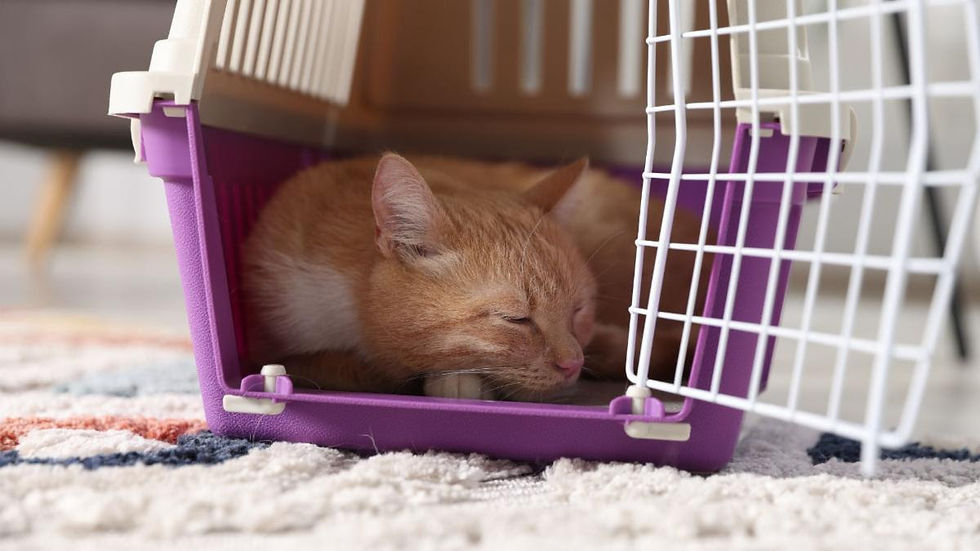
Waiting until an evacuation order is issued may be the first time your companion animal has seen the carrier in months.
Leave it open where your companion animal likes to rest.
Place a blanket or a few treats inside so walking into the carrier becomes familiar before an emergency happens.
3. Pack for more than a weekend
Nearly 40% of people who evacuated because of a disaster stayed away from home for at least four days.
Some could not return for up to two weeks.
Pack enough food, water, medications, and other essentials to last at least 7 to 10 days.
4. Write important information on the carrier

Write your name, phone number, your companion animal's name, and any urgent medical needs directly on the carrier.
Keep copies of vaccination and medical records in a waterproof bag inside it.
If your companion animal needs veterinary care during an evacuation, those records will already be available.
5. Ask someone to evacuate your companion animal if you can't
Choose a trusted neighbor, friend, or family member who can enter your home if you are at work, in the hospital, or unable to return because roads are closed.
Give that person a spare key and show them where the carrier, leash, medications, and emergency kit are kept.
Making those arrangements now means someone already knows exactly what to do if an evacuation is ordered.

Preparing for an emergency protects the dogs and cats already living in our homes.
Our mission is focused on the millions of dogs and cats who will never have someone to make those preparations for them.
The world's 600 million stray dogs and 87 million stray cats give birth to over 1 billion homeless puppies and kittens every year.
Tragically, those who survive also reproduce, creating another generation of homeless strays and repeating the cycle of suffering year after year.

This is why our mission is to end the #1 cause of suffering and death for dogs and cats — overpopulation — by developing a Cookie that will only need to be eaten one time, and it will, in effect, spay or neuter — without surgery.
With your help, we will end this suffering!
Please join us.
Thank you for caring and for helping animals!
Sources:
Comments